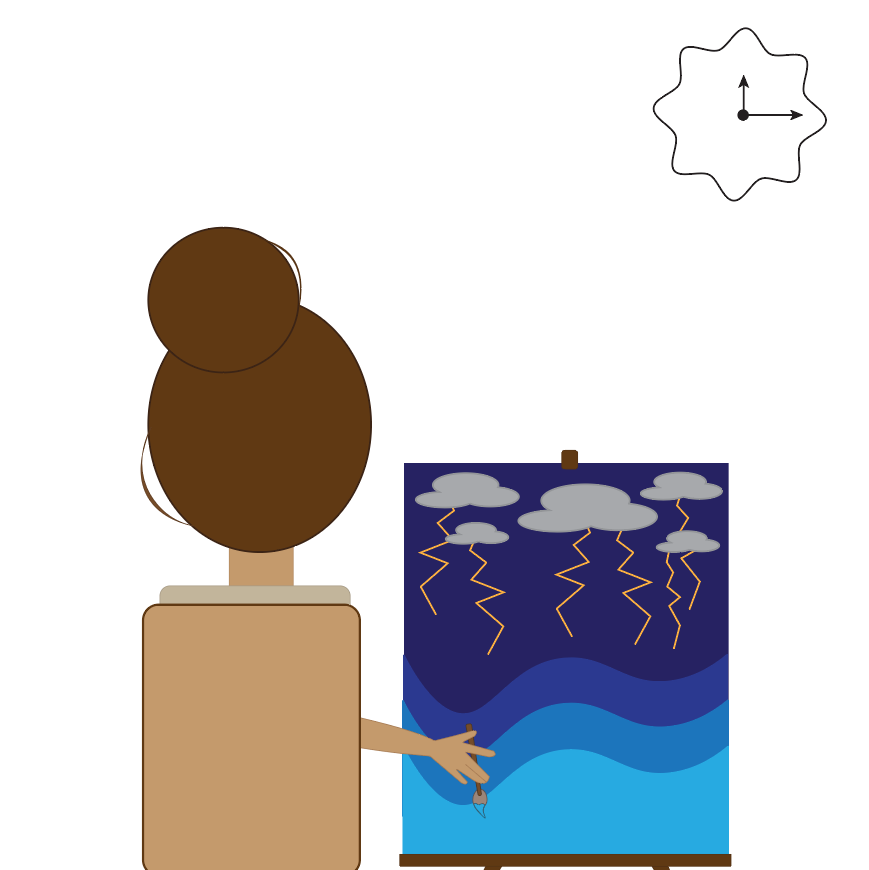
Throughout the whole process of the animation the five theories that Edward Tufte talked about have been somehow incorporated into my work. The first one, the colour theory was used in the early stages of the animation, using different shades and hues of colours to help make it easier for the viewers to differentiate different aspects of the scene. For example, the first scene where we see the illustration of the girl, different shades were used to create a clear visual differentiation between the skin tone, the shirt and the hair, using similar colours but different enough where the viewers aren’t confused.
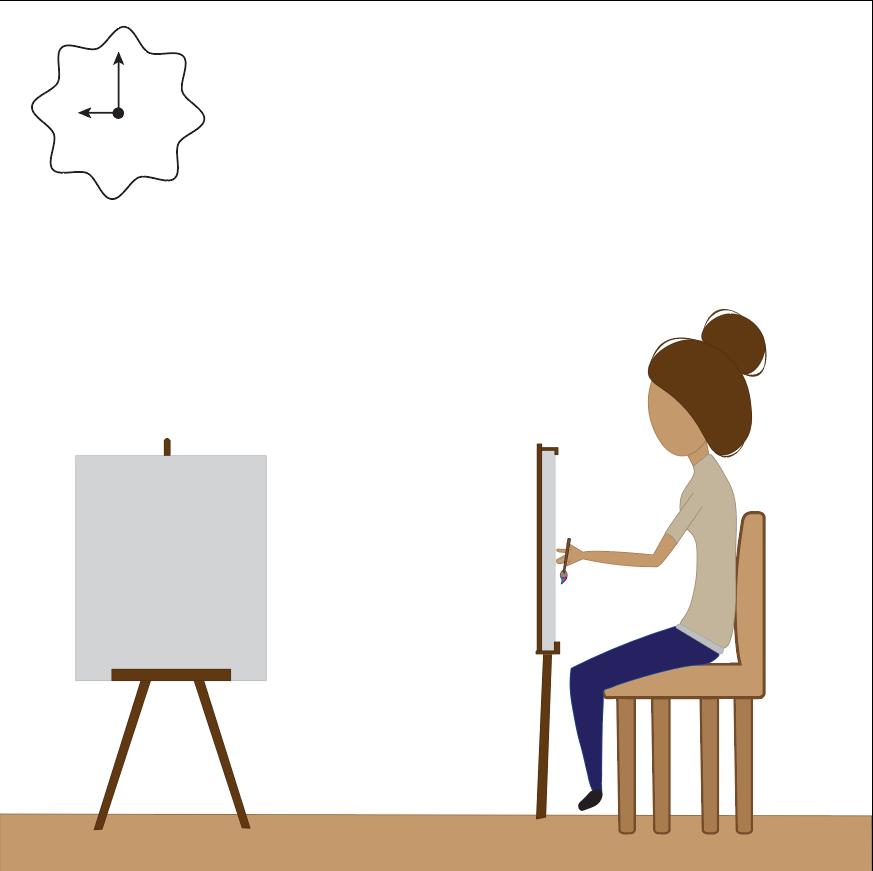
The second theory that Tufte has talked about that I will encorporate into the animation is that of small multiples. This is when changes happen to a scene, small changes, to create a sequence that is easy to follow like in the movies. For this the best example is the third scene, where the position of the girl is changed and in the animation the brush that the girl paints the canvas with is animated to move from left to right. This creates a smooth movement that is a small change that is easy to follow for the viewers.
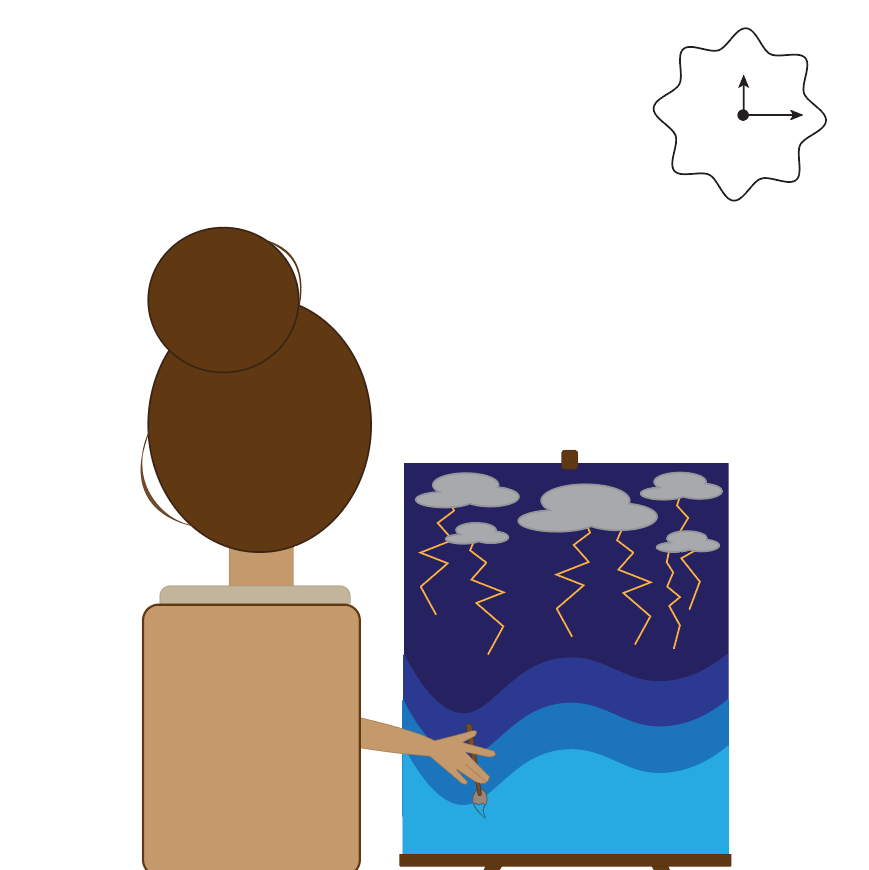
For the third theory from Tufte that I will incorporate into my work is the narrative over time and space. This theory focuses on using narrative with pictures to represent a motion. The best example for this theory is the fourth scene, where the robot’s eye will have some elements moving inside the eye to show it’s mechanical movement, this should help portray to the viewers that it’s a robots eye, representing the motion of a mechanical movement using the illustrations inside the eye.

The fourth theory that Tufte has talked about that I will incorporate into my work is the layering and separation theory. This theory focuses on layering and separating pieces of information to help the work feel less clustered and busy, one of the best ways to do this is by using different colour. The best example that could be used for this theory is the same scene as the third theory, the robot eye because this scene uses only the colour blue but due to the different layers of blue that are used it makes it easier for the viewers to tell it apart without feeling clustered, helping the eye not look blended together.

The final theory that Tufte has talked about that I will incorporate into my work is the micro/macro readings. This theory is all about using graphics that convey information on a micro scale and another layer on a zoomed-out macro scale. The best example that could be used for this theory is the third scene where the camera zooms into the clock, the macro being the start of the scene where the clock is far away and the micro would be when the camera zooms into the middle of the clock making it micro.