
For the ethical or sustainable subject that we had to choose. I have chosen to do it on the impact Artificial Intelligence (AI) has on the creative jobs field such as music, art, graphics and any other visually creative field. Ever since AI has been around people have been divided on their stance about how much it’s used in jobs that don’t necessarily need it. Some people view it as a way for big companies to save costs that they can afford to give to real artists for their own gains. With AI having to be programmed by a human, it doesn’t have any originality to it so, it steals original art from already existing artwork and combining it together with other stolen art to create the AI version of the prompt that is inputted into it. This also goes into the other ethical issue of plagiarism and stealing artwork from others.
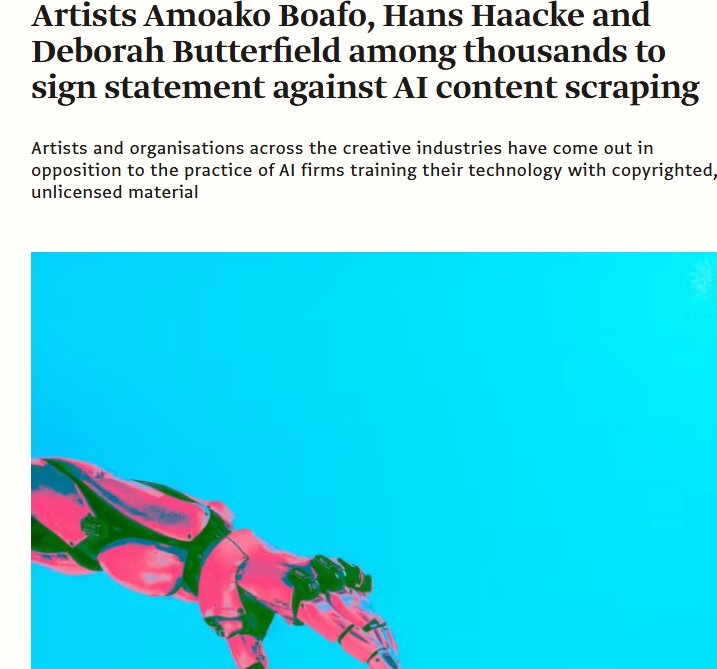
When thinking about the audience that will be interested in the AI use in creative fields the first people that come to mind are creatives such as artists, musicians, writers, etc. Anyone that is interested in joining the industry or just doing something creative as a hobby. Looking deeper into this I stumbled upon an article (1) that supports this. With the statement: ‘Thousands of creatives across the worlds of art, film, music and publishing have signed a public statement opposing the unlicensed use of copyrighted work for training generative artificial intelligence (AI) models.’ It shows that people in the creative community are against the use of AI copyrighting artist’s work.
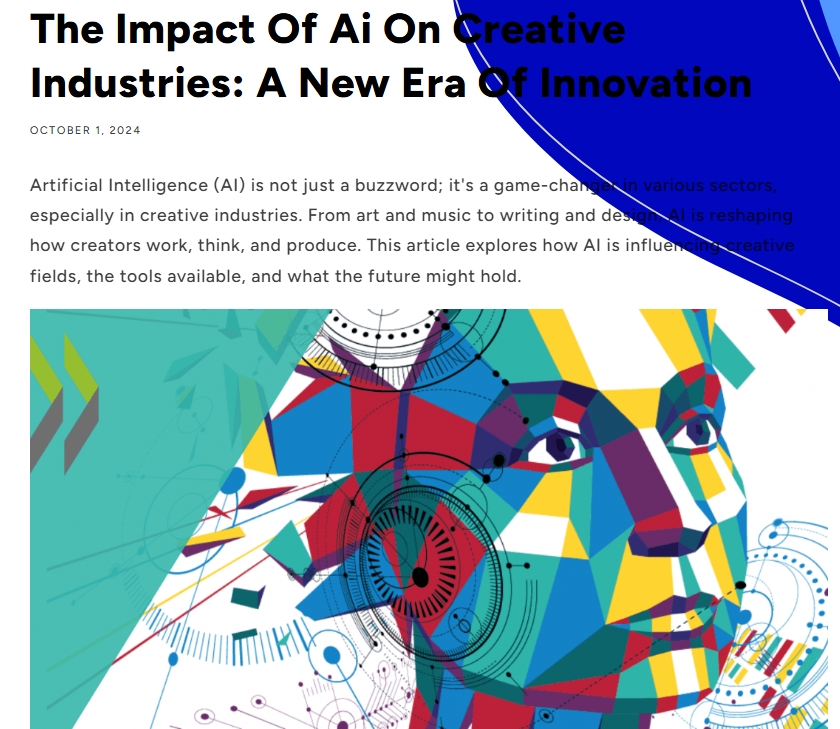
The purpose of AI in creative industries is to ‘AI can act as a collaborator, providing suggestions and enhancements to human-created content.’ This is what the article (2) says about how AI is changing the industry. However, the risks of using AI are greater than the potential benefits. With ethical and legal concerns (3) coming to light. Since the questions like ‘Who owns AI-generated content?’ and ‘If an AI generates a piece of work who takes the credits?’ are often asked when thinking about AI and its use in creative fields. The purpose of AI sounds promising but the risks and concerns it brings people who may have their jobs taken away by it are going unanswered.
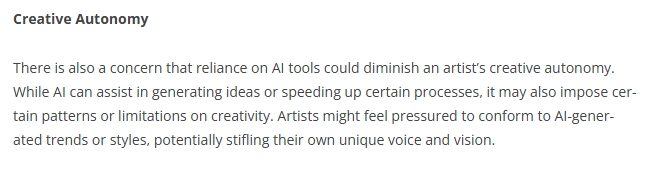
When looking deeper into what people are saying about AI being used in creative ways, to help better my animation later an article popped up that talked about ‘Creative Autonomy’ (4) and how artists might feel threatened by AI which could lead to them feel pressured to join in on the AI-generated trends which could lead to them losing their own style and voice due to using AI.
1 – Torey Akers (October 24, 2024.) Artists Amoako Boafo, Hans Haacke and Deborah Butterfield among thousands to sign statement against AI content scraping. Available at: Thousands sign statement against AI content scraping, including Hans Haacke and Deborah Butterfield – undefined [Accessed 04 May 2025]
2 -Peerdh (October 1, 2024.) The Impact Of Ai On Creative Industries: A New Era Of Innovation. Available at: The Impact Of Ai On Creative Industries: A New Era Of Innovation – peerdh.com [Accessed 04 May 2025]
3 – Toxigon (March 3, 2025.) AI in Creative Industries: A Double-Edged Sword. Available at: AI in Creative Industries: A Double-Edged Sword – Toxigon [Accessed 04 May 2025]
4 – Wayne Horkan (July 23, 2024.) The Impact of AI on Creative Industries: Navigating Ownership, Revenue, and Job Security. Available at: The Impact of AI on Creative Industries: Navigating Ownership, Revenue, and Job Security – Horkan [Accessed 04 May 2025]